Understanding a design-first remodeling process and why it doesn’t begin with a quick estimate.
Most People Start in the Wrong Place
Design-Build vs Contractor is one of the first decisions homeowners face when starting a remodeling project, along with whether to hire an architect or explore a design-led approach. If you’ve started thinking about remodeling, you’ve probably run into the same question quickly: do you call a contractor, an architect, or look for a design-build firm?
This design-build vs contractor vs architect decision often feels unclear because each path starts from a different place.
Some will suggest starting with drawings. Others will move straight to pricing. A few will position themselves as handling everything. None of those approaches are inherently wrong. They simply begin from different starting points. That’s where the confusion tends to begin.
Because early on, you’re not just trying to decide who to hire. You’re trying to understand whether the project makes sense at all. Financially, practically, and within your home. So the instinct is to ask for a number. Just a rough estimate. Something to react to.
And that’s often where the process begins to lose clarity.
Why Remodeling Feels So Unclear at the Start
Pricing only becomes reliable once the project is clearly defined. Before that, it’s based on assumptions. Some reasonable. Some less so. That said, experienced teams can often provide a preliminary range early on. The key is understanding that it is a starting point, not a final number, until the design and scope are fully developed.
At that stage in the remodeling process, layout, materials, and scope are still undefined. So when a number is introduced early, it reflects a version of the project that may not align with what you ultimately decide to build.
Decisions are made. The scope becomes more defined. And the cost adjusts accordingly. That’s when the process starts to feel unpredictable, even when everyone involved is working with good intentions.
Design-Build vs Contractor vs Architect
There isn’t a single, consistent way to begin a remodeling project. You can start with a contractor, an architect, or a design-build firm. Each approach works, but they create very different experiences.
When evaluating design-build vs contractor vs architect, the key differences come down to how decisions are made early, how clearly the project is defined, and how closely design and construction are aligned from the start.
If you begin with a contractor, the conversation often moves toward construction fairly quickly. That can work well if the project is already well defined. But if it’s still taking shape, early pricing is based on a number of unknowns.
If you begin with an architect, the process starts with design. That can bring clarity to layout and overall direction. But construction typically follows through a separate bidding process. That’s where costs can vary more than expected, and projects sometimes need to be revised after the design is complete.
Design-build companies bring design and construction together under one team. This usually improves communication and keeps decisions aligned with what can realistically be built.
But even within that model, the approach can vary significantly depending on how the firm leads the process. And that difference often becomes clear later, not at the beginning.
Where Projects Start to Break Down
Most remodeling challenges don’t come from a single major issue. They develop over time within the remodeling process, especially when early decisions are made without full clarity.
It often looks like this:
- Pricing begins before the scope is fully defined
- Layout decisions are pushed into construction
- Materials are selected later, under time constraints
Individually, these decisions may seem manageable.
But together, they tend to lead to the same outcomes. Costs shift more than expected. Decisions feel rushed. The process becomes more difficult than it needs to be.
Why Design Comes First
Design isn’t just about how a space looks. It defines the project.
This is where the difference between design build vs contractor becomes more apparent. A design-led approach establishes scope before pricing, while contractor-led approaches may introduce costs earlier in the process.
It determines how the space functions, what is being built, what materials are used, and how everything comes together. Once those elements are clearly established, the budget becomes more grounded because it reflects real decisions.
Without that clarity, pricing will continue to shift. With it, the project becomes more stable from the beginning.
How Armitage Approaches It
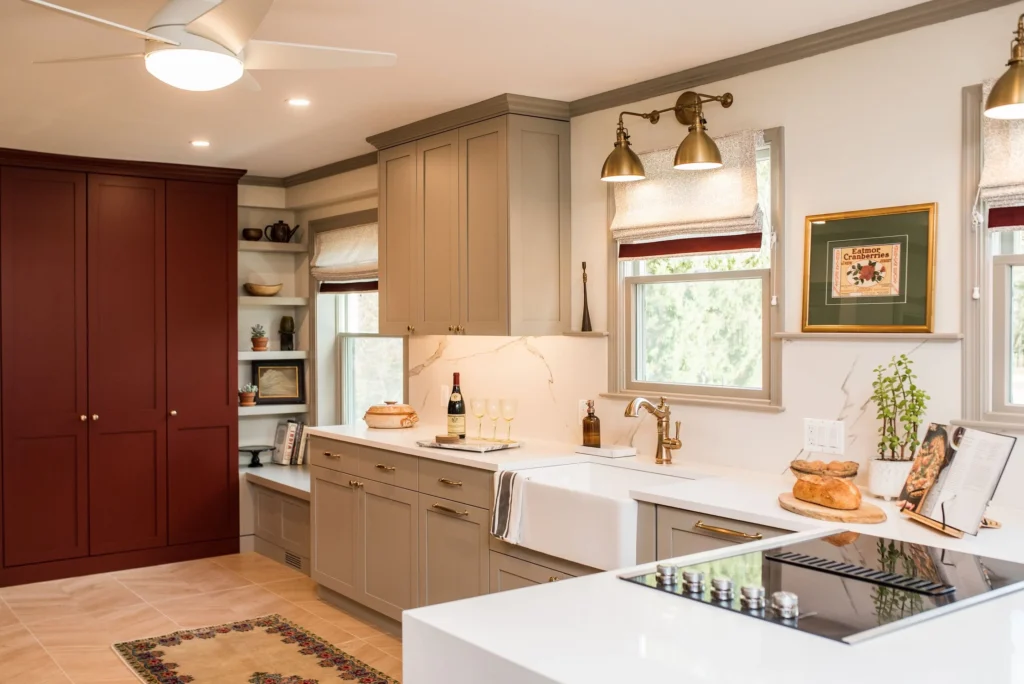
At Armitage, we guide projects this way for a reason. We don’t begin with fixed pricing or rushed construction decisions. We begin by bringing clarity to the project itself, while also providing early budget guidance based on similar projects, allowances, and your overall goals.
This design-first approach creates a more predictable and controlled remodeling process, whether you’re planning a kitchen remodel, updating a bathroom, or considering a full whole-home renovation. Decisions are made intentionally rather than reactively.
That starts with understanding how you live in your home, what you want the space to become, and what is realistically possible. From there, we develop the layout, selections, and details that define the full scope of work. As that clarity builds, the budget develops alongside it.
“Every client has different goals, concerns, and constraints. Our role is to balance thoughtful design with real-world budgets and limitations, then execute a project whose quality exceeds expectations.”
Early in the process, we provide a realistic budget range to help anchor expectations. From there, we refine the scope and selections to align with your priorities, investment level, and what is achievable within your home.
Instead of reacting to a rough number, you are able to understand how each decision shapes the overall investment and adjust accordingly before construction begins. By that point, the project is no longer being figured out in real time. It has already been carefully considered.
To see how design-build works on a single room, take a look at our approach to kitchen remodeling in Bucks County.
What That Means for You
If you’re used to receiving a quick estimate at the beginning, this approach may feel different.
You will receive early budget guidance to help set direction, along with the clarity needed to make informed decisions. As the design develops, that initial range becomes more refined and aligned with the actual scope of your project.
By the time you move into construction, the project is fully defined. You understand the scope, the selections, and how each decision shapes the overall investment.
That is where much of the uncertainty is removed.
A Better Way to Start a Remodeling Project
If you’re considering a remodel and want to better understand what a design-led approach looks like in practice, we’ve outlined our full process step by step. You can explore it here →